


Why Does a Thermostat Need a Floor Temperature Limit?
May 08, 2026
When choosing a thermostat for underfloor heating, many users focus on WiFi control, weekly programming, touch screen design, or energy-saving functions. However, one important feature is often overlooked: floor temperature limit.
For electric underfloor heating and water underfloor heating systems, floor temperature control is not only about comfort. It also helps protect the floor material, improve safety, and extend the service life of the heating system.
What Is a Floor Temperature Limit?
A floor temperature limit is a maximum temperature setting for the floor surface or floor sensor.
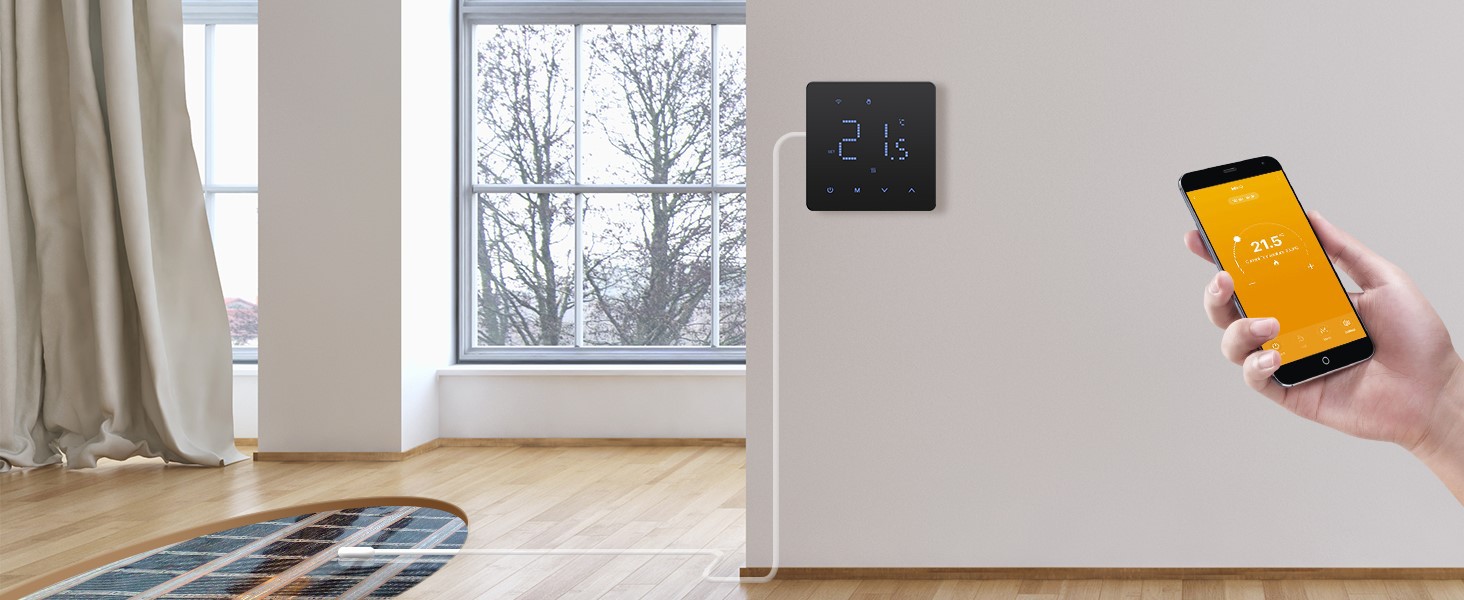
In a typical underfloor heating system, the thermostat can measure temperature in two ways:
Room temperature sensor
This sensor is usually built into the thermostat and measures the air temperature in the room.
Floor temperature sensor
This sensor is installed under the floor and measures the actual floor temperature.
The floor temperature limit function allows the thermostat to stop or reduce heating when the floor temperature reaches the preset maximum value.
For example, even if the room temperature has not reached the target temperature, the thermostat can stop heating when the floor temperature reaches the safety limit.
Why Is Floor Temperature Limit Important?
1. It Protects the Floor Material
Different floor materials have different temperature tolerance levels.
Ceramic tiles and stone floors can usually handle higher temperatures. However, wooden floors, laminate floors, vinyl floors, and some carpets may be more sensitive to heat.
If the floor temperature becomes too high for a long time, it may cause problems such as:
Floor deformation, Cracking, Warping, Discoloration, Adhesive damage, Shorter floor service life
This is especially important for wooden and laminate floors. These materials may expand or shrink when exposed to excessive heat.
A thermostat with a floor temperature limit can help prevent overheating and protect the floor finish.
2. It Improves Safety
In electric underfloor heating systems, heating cables or heating mats are installed below the floor. If the system runs continuously without proper temperature limitation, the floor may become too hot.
A floor temperature limit helps reduce the risk of overheating. This makes the heating system safer for daily use, especially in bathrooms, bedrooms, children's rooms, and residential buildings.
For distributors, installers, and project buyers, this function is also an important selling point because it shows that the thermostat is designed with safety protection in mind.
3. It Makes the Room More Comfortable
Room temperature and floor temperature are not always the same.
For example, in a bathroom, the air temperature may still feel low, but the floor may already be warm enough. Without a floor temperature limit, the system may continue heating, making the floor uncomfortable to walk on.
With floor temperature control, the thermostat can keep the floor within a comfortable temperature range.
This is especially useful in:Bedrooms/Living rooms/Children's rooms/Hotels and apartments/High-end residential heating systems ect..
A comfortable floor temperature improves the user experience and avoids the feeling of an overheated floor.
4. It Helps Save Energy
If the floor keeps heating even after reaching a suitable temperature, energy will be wasted.
A thermostat with floor temperature limit can stop heating when the floor temperature reaches the set maximum value. This helps avoid unnecessary power consumption.
For electric underfloor heating, this can be especially useful because the heating cable is a direct electrical load. Better temperature control means better energy efficiency.
When combined with weekly programming and WiFi app control, the thermostat can provide a more efficient heating solution for users.
5. It Is Important for Different Floor Types
The suitable floor temperature limit depends on the floor material and heating system design. As a general reference:
| Floor Type | Suggested Floor Limit Reference |
|---|---|
| Ceramic tile / stone | Can usually allow higher floor temperature |
| Laminate floor | Should use a lower temperature limit |
| Wooden floor | Needs careful temperature protection |
| Vinyl floor | Should follow floor manufacturer limits |
| Carpet | Requires special attention to heat resistance |
The exact temperature should always follow the floor manufacturer's installation instructions. For many wooden, laminate, or vinyl floors, the maximum floor temperature is often lower than tile floors.
Therefore, when selecting a thermostat, it is important to choose a model that supports external floor sensor and floor temperature limitation.
You Might Also Like
-
Zigbee Wireless Gateway
-

Normally Closed Type Electric Thermal Actuator RZ-AN230-NC
-

Combi Boiler Temperature Control Thermostat TGR85-WIFI-WPB
-

White Frame And Backlight Touch Screen Fan Coil Thermosta...
-
RF Wireless Gas Boiler Heating Thermostat BOT-R8X-WIFI
-

RZ-AK 230V Normally Closed Thermal Actuator For Underfloo...