


How to Choose a WiFi Thermostat for Heat Pump Systems
Jun 05, 2026
As heat pumps become one of the most energy-efficient heating and cooling solutions for modern homes, choosing the right WiFi thermostat has never been more important. A compatible smart thermostat can help homeowners reduce energy consumption, improve indoor comfort, and control their heating system remotely from anywhere.
However, not all thermostats are designed to work effectively with heat pump systems. Selecting the wrong model may result in inefficient operation, higher energy bills, or limited functionality.
In this guide, we'll explain how heat pumps work, what features to look for in a WiFi thermostat, and how to choose the best thermostat for your heat pump system.
What Is a Heat Pump System?
A heat pump is an energy-efficient HVAC system that transfers heat rather than generating it directly. During winter, it extracts heat from outdoor air and moves it indoors. In summer, the process is reversed to provide cooling.
Heat pumps are becoming increasingly popular because they:
- Consume less energy than traditional heating systems
- Reduce carbon emissions
- Provide both heating and cooling functions
- Support sustainable and low-carbon building initiatives
Because heat pumps operate differently from conventional furnaces or boilers, they require thermostats specifically designed to support heat pump control logic.
Why Choosing the Right WiFi Thermostat Matters
A WiFi thermostat acts as the control center of your heating system. When paired correctly with a heat pump, it can optimize performance and maximize energy savings.
Benefits of using a smart WiFi thermostat with a heat pump include:
- Remote temperature control via smartphone app
- Flexible scheduling and automation
- Improved energy efficiency
- Real-time temperature monitoring
- Reduced heating and cooling costs
- Better comfort throughout the home
Many homeowners can achieve noticeable energy savings simply by upgrading to a smart thermostat that intelligently manages heat pump operation.

How to choose the best thermostat for your heat pump system
1. Verify Heat Pump Compatibility
The first and most important consideration is compatibility.
Not every thermostat supports heat pump systems. Before purchasing, verify whether the thermostat is designed for:
- Air-source heat pumps
- Ground-source heat pumps
- Single-stage heat pumps
- Multi-stage heat pumps
- Auxiliary or emergency heating systems
A compatible WiFi thermostat should clearly state heat pump support in its specifications.
If your system includes auxiliary heating, make sure the thermostat can automatically manage both the heat pump and backup heat source.
2. Look for Smart Scheduling Features
One of the biggest advantages of a WiFi thermostat is programmable scheduling.
Advanced scheduling allows homeowners to:
- Lower temperatures when nobody is home
- Automatically adjust heating during sleeping hours
- Increase comfort before occupants arrive
- Reduce unnecessary energy consumption
For heat pump systems, gradual temperature adjustments are often more efficient than large temperature swings.
Smart scheduling helps maintain stable indoor temperatures while minimizing energy use.
3. Choose a Thermostat with Energy-Saving Functions
Energy efficiency is one of the primary reasons homeowners invest in heat pumps.
A quality WiFi thermostat should include:
Adaptive Learning
The thermostat learns heating patterns and automatically optimizes operation.
Open Window Detection
The system detects sudden temperature drops and temporarily pauses heating to avoid energy waste.
Temperature Optimization
Smart algorithms prevent excessive auxiliary heating usage, which can significantly increase electricity consumption.
Energy Reports
Users can monitor energy usage and identify opportunities for savings.

4. Consider Smart Home Integration
Modern homeowners increasingly expect connected devices to work together.
A WiFi thermostat that supports smart home ecosystems offers greater convenience and automation.
Look for compatibility with:
- Amazon Alexa
- Google Home
- Smart home platforms
- Voice control systems
Integration allows users to adjust temperatures using voice commands or automate heating based on occupancy and routines.
5. Ensure Reliable Remote Access
Remote control is one of the most valuable features of a WiFi thermostat.
Whether you're at work, traveling, or managing a vacation property, remote access allows you to:
Change temperature settings instantly
Monitor indoor conditions
Receive alerts and notifications
Prevent frozen pipes during winter
For property managers and homeowners with second homes, remote heating management can provide significant convenience and cost savings.
6. Evaluate Temperature Accuracy
Accurate temperature sensing is essential for heat pump performance.
A thermostat with poor accuracy may cause:
Frequent cycling
Reduced efficiency
Uneven comfort
Increased energy costs
Look for models with:
High-precision sensors
Calibration functions
Floor sensor support for underfloor heating systems
For radiant floor heating applications, dual temperature sensing (room and floor) can deliver better comfort and system protection.
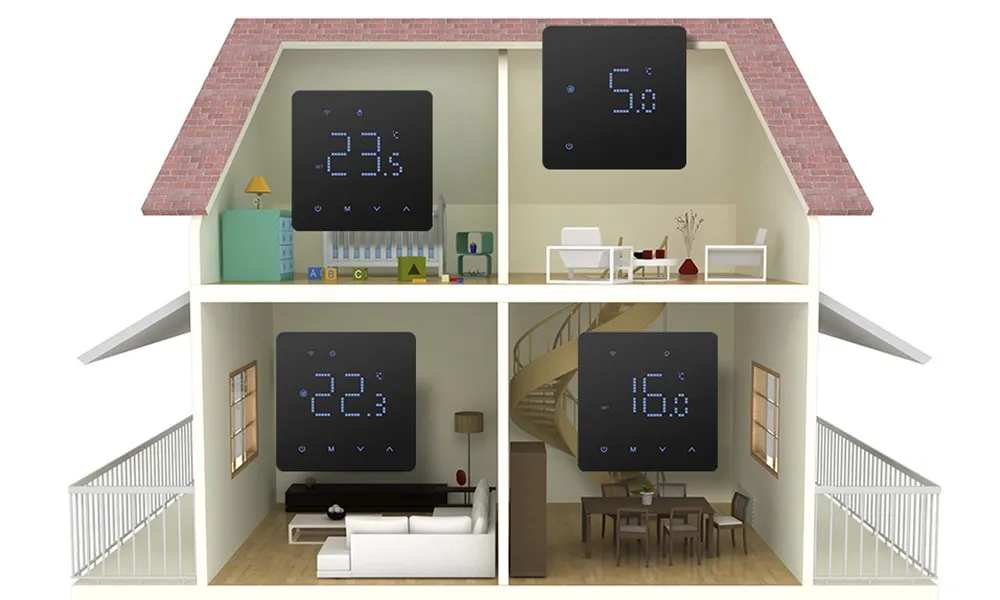
7. Check Multi-Zone Heating Support
Larger homes often require different temperatures in different rooms.
Multi-zone heating allows each area to be controlled independently.
Benefits include:
Personalized comfort
Lower energy consumption
Improved heating efficiency
Better system performance
8. Consider Future-Proof Connectivity
Smart home technology continues to evolve.
When selecting a thermostat, consider support for:
WiFi connectivity
Over-the-air software updates
Smart home integrations
Future communication standards
Choosing a future-ready thermostat helps protect your investment and ensures compatibility with emerging technologies.
9. Common Mistakes to Avoid
When selecting a WiFi thermostat for a heat pump, avoid these common mistakes:
Choosing Based on Price Alone
The cheapest option may not support your heat pump properly.
Ignoring Compatibility Requirements
Always verify system specifications before purchasing.
Overlooking Energy-Saving Features
Advanced controls often provide long-term savings that outweigh initial costs.
Forgetting About Smart Home Integration
Connected functionality adds convenience and enhances the user experience.
Why BEOK Controls WiFi Thermostats Are a Smart Choice
BEOK Controls offers advanced WiFi thermostats designed for modern heating applications, including underfloor heating and heat pump systems.
Key advantages include:
Remote app control
Smart scheduling
High-precision temperature sensing
Energy-saving functions
Smart home integration
User-friendly interface
OEM and private label support
Whether you're a homeowner, distributor, or HVAC professional, selecting the right thermostat can help maximize the efficiency and comfort of your heat pump system.
Conclusion
Choosing the right WiFi thermostat for a heat pump system is essential for achieving maximum comfort, energy efficiency, and long-term cost savings.
Before purchasing, verify compatibility, evaluate smart features, consider energy-saving capabilities, and ensure reliable connectivity. A well-designed smart thermostat can unlock the full potential of your heat pump and help create a more efficient, connected home.
As heat pump adoption continues to grow worldwide, investing in a high-quality WiFi thermostat is one of the smartest upgrades homeowners can make.
You Might Also Like
-

TGR86 Smart Thermostat in Floor Heating with Round Screen
-

TR8B WIFI UFH Thermostat for Floor Heating
-
Black Round Screen Wifi Radiator Control Actuator TRV-705WF
-

Wired Gas Boiler Heating Smart Thermostat BOT-R15W-WIFI
-
BOT-R8W-WIFI Smart Thermostat For Gas Boiler
-
Programmable Underfloor Heating Thermostat TDR48