


Best Smart Thermostat Features Buyers Should Look For
May 22, 2026
What Is a Smart Thermostat?
A Smart Thermostat is an advanced temperature control device that allows users to manage heating and cooling systems automatically or remotely through mobile apps, WiFi connectivity, or smart home platforms.
Unlike traditional thermostats, smart models provide intelligent scheduling, remote access, energy-saving functions, and real-time monitoring to improve both comfort and efficiency.
1. WiFi Connectivity
One of the most essential features of a modern Smart Thermostat is WiFi connectivity.
With built-in WiFi, users can:
- Control temperature remotely via smartphone
- Monitor HVAC performance anytime
- Adjust settings while away from home
- Receive alerts and notifications
- WiFi-enabled thermostats are especially useful for busy homeowners, property managers, and commercial building operators who want flexible temperature control.
Why It Matters
Remote access improves convenience and helps reduce unnecessary energy consumption when spaces are unoccupied.
2. Mobile App Control
A high-quality Smart Thermostat should come with an intuitive mobile application.
The app should allow users to:
Change temperature settings
Create heating/cooling schedules
Monitor energy usage
Set vacation modes
Receive maintenance reminders
A user-friendly app significantly improves the overall customer experience.
3. Energy-Saving Functions
Energy efficiency is one of the biggest reasons people upgrade to a Smart Thermostat.
Look for features such as:
- Programmable scheduling
- Auto temperature adjustment
- Open window detection
- Adaptive learning
- Eco mode
These functions help reduce electricity and heating costs while maintaining indoor comfort.
Example
A smart thermostat can automatically lower heating when nobody is home and restore comfort before occupants return.
4. Compatibility with HVAC Systems
Not all thermostats work with every HVAC system.
Before purchasing a Smart Thermostat, buyers should verify compatibility with:
- Gas boilers
- Electric heating systems
- Underfloor heating
- Fan coil units
- Central HVAC systems
Choosing the wrong thermostat may lead to installation issues or limited functionality.
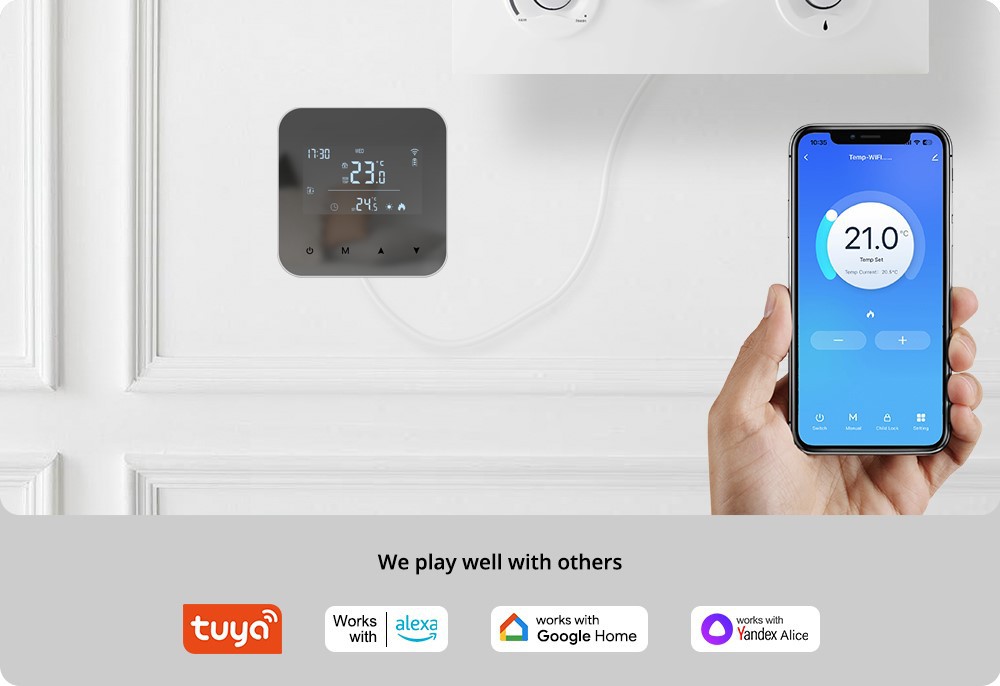
5. Smart Home Integration
Modern consumers increasingly prefer connected smart homes.
A good Smart Thermostat should support integration with platforms such as:
- Amazon Alexa
- Google Home
- Tuya Smart
- Smart Life App
Voice control and automation make temperature management more convenient and intelligent.
6. Programmable Scheduling
Scheduling is a key feature buyers should never overlook.
A programmable Smart Thermostat allows users to create custom temperature plans based on:
- Time of day
- Weekdays and weekends
This improves comfort while minimizing unnecessary HVAC operation.
7. Touchscreen or Modern Display
An easy-to-read display improves usability and product appeal.
Popular display features include:
- Touchscreen controls
- LED backlight
- Real-time temperature display
A modern display not only enhances functionality but also complements contemporary interior design.
8. Multi-Zone Control
For larger homes or commercial buildings, multi-zone functionality is extremely valuable.
A multi-zone Smart Thermostat system allows users to control temperatures independently in different rooms or areas.
Benefits Include:
- Improved comfort
- Better energy efficiency
- Customized room settings
- Reduced HVAC workload
This feature is especially popular in hotels, offices, and luxury residential projects.
9. Reliable OEM & ODM Support
For distributors, importers, and HVAC brands, supplier capabilities are equally important.
A professional Smart Thermostat manufacturer should provide:
- OEM customization
- ODM development
- Certification support
- Stable production capacity
- Technical after-sales service
Reliable manufacturing partners help businesses grow their own thermostat brands successfully.
Final Thoughts
Choosing the right Smart Thermostat involves much more than simply comparing prices. Buyers should focus on features that improve convenience, energy efficiency, compatibility, and long-term reliability.
From WiFi connectivity and smart home integration to precise temperature control and modern design, the right thermostat can significantly improve both comfort and HVAC system performance.
As smart home technology continues to expand in 2026, investing in a high-quality Smart Thermostat is becoming an increasingly smart decision for homeowners and businesses alike.
You Might Also Like
-

TGR86 Smart Thermostat in Floor Heating with Round Screen
-

Battery And USB Powered Wifi Boiler Thermostat BOT-T9N-WIFI
-

White Touch Screen Boiler Thermostat TGW60-WIFI-WPB
-

TR33-WIFI-WPB Wifi Thermostat for Gas Boiler
-

BOT-W306 Smart Room Thermostat For Boiler
-
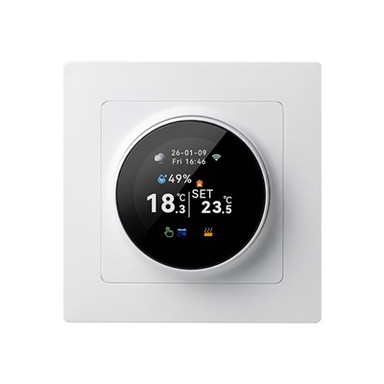
Smart Wifi Round Colorful Screen Gas Boiler Thermostat TCC31